
Pressure Washer Concrete Cleaning Equipment
Pressure Washer Concrete Cleaning Equipment
Cleaning concrete properly can be tough and there is an easy way and a hard way. There is one thing you need to understand when you are pressure washer cleaning concrete.
The concrete cannot always be made to look brand new again after it has been stained. You can always get stains lighter or bleached but completely removing it is very difficult.
Sometimes you might get lucky, but if you are looking for perfection, chances are you will be underwhelmed.
What you need to know for pressure washer cleaning concrete
If you are a pressure cleaning subcontractor we recommend talking to customers letting them know upfront and explain this to them otherwise they will be asking for a job that just can’t be done unless the entire concrete slab is ripped up and re-poured.
As well if you are wanting to do your own pressure washer concrete cleaning and are looking to rent a pressure washer for a period of time, just remember that it might not be a perfect finish.
What pressure washer equipment do you need ?
Let’s talk about the equipment that is needed for this type of work. Remember safety is always important when working with a pressure washer.
Some times there are chemicals involved in cleaning some stains. Thus, you should always use some type of eye protection. Also, when you are using chemicals you need to wear long pants to protect your legs.
Chemicals made for concrete are very strong and should not be toyed with.
Would a person rather work with dry feet or wet? It is recommended that you get rubber waders or some type of rubber boot. They will keep your feet from getting wet and keep them from getting burned by hot water.
Safety matters
Orange safety cones are also important to have for this job. This helps make people visually aware that you are there if you are in a high traffic area or where there are a lot of contract workers at say a newly constructed house that needs the concrete cleaned.
This makes everyone around you safe and you are helping prevent accidents. Of course, you are going to need a rotary surface cleaner for this job.
You can technically do the job with a wand but it will take a lot more time and water, not to mention you can cause streaking if you are not using even strokes across the slab of concrete.
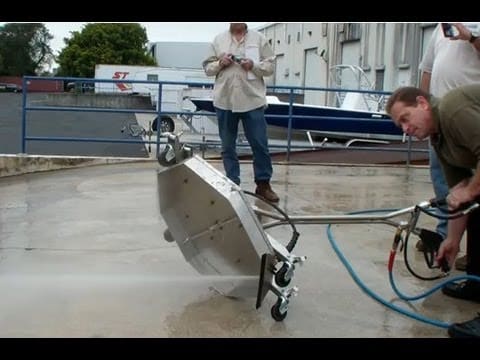
Most of the new hot water pressure washers have an option of a rotary surface cleaner unit but if you don’t have one and or you need a second unit we recommend that you go to buy or rent one.
When buying a rotary surface cleaner buy or rent the larger model if you can. There may be only a 5-inch difference in surface coverage but it is well worth it when you are trying to save time without cutting corners.
Especially if you are cleaning concrete at a construction site or a large retail type box store, there is a lot of concrete and the faster you clean it the more money you will make. Think about it.


Thanks for this
You’re very welcome.